Your work has a very distinctive style. You’ve described it as “heavy” – what do you mean by that?
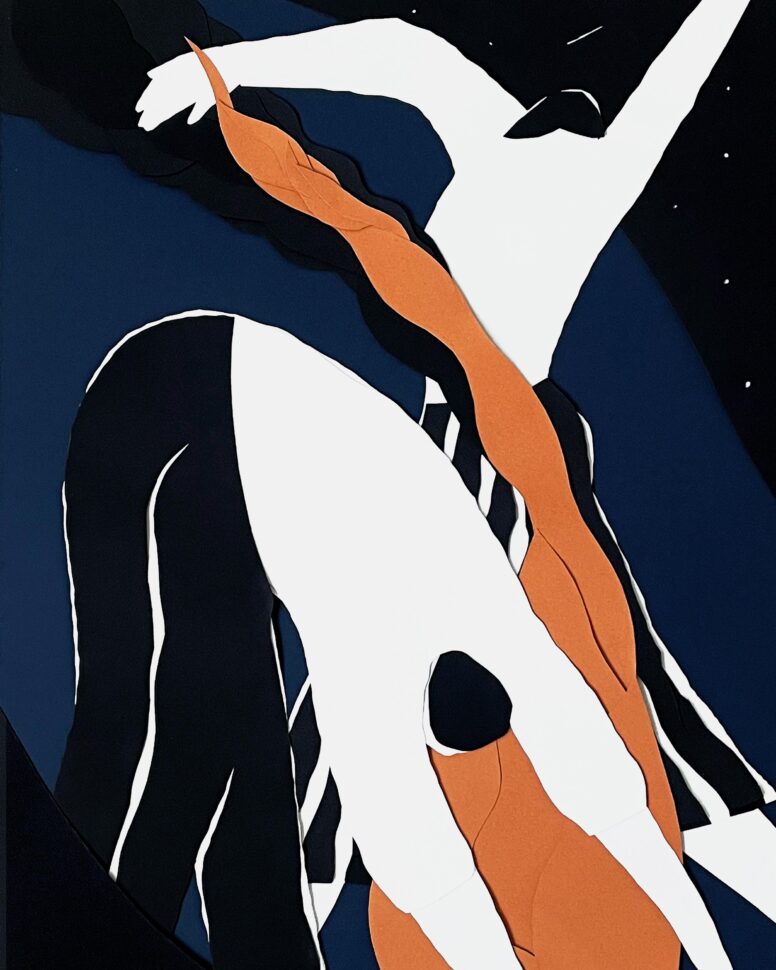
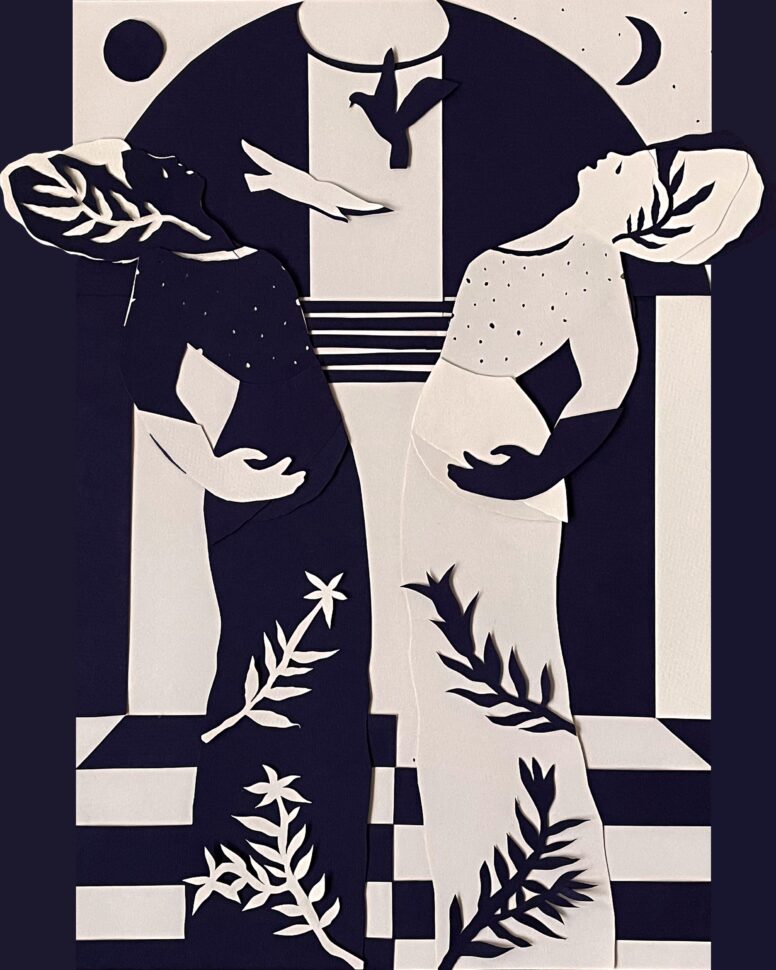
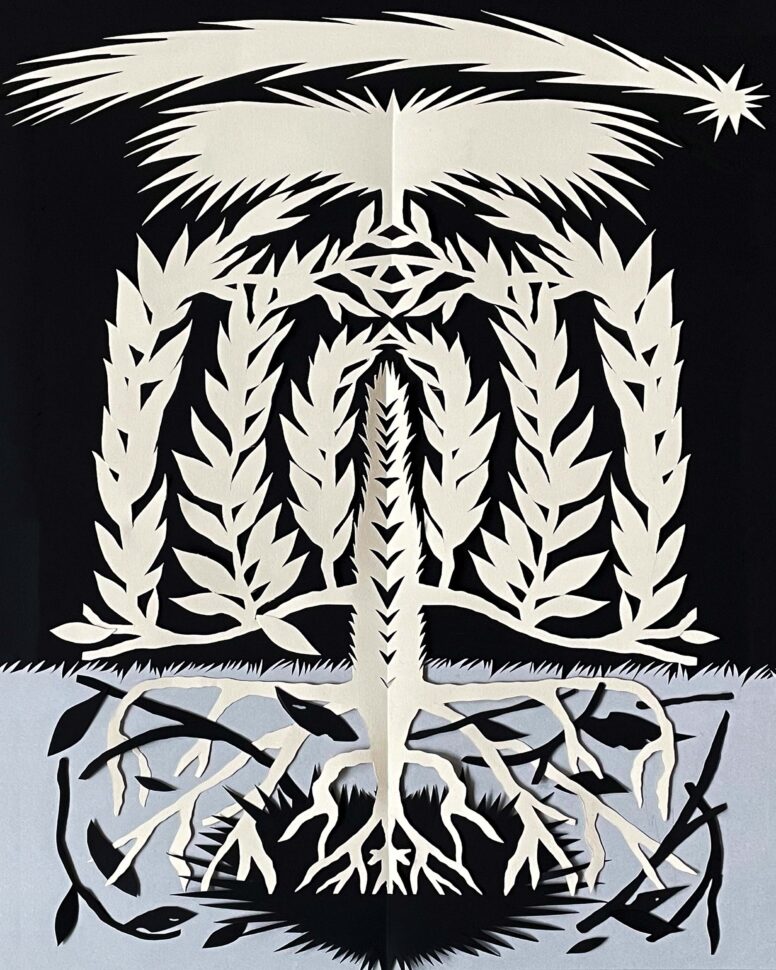
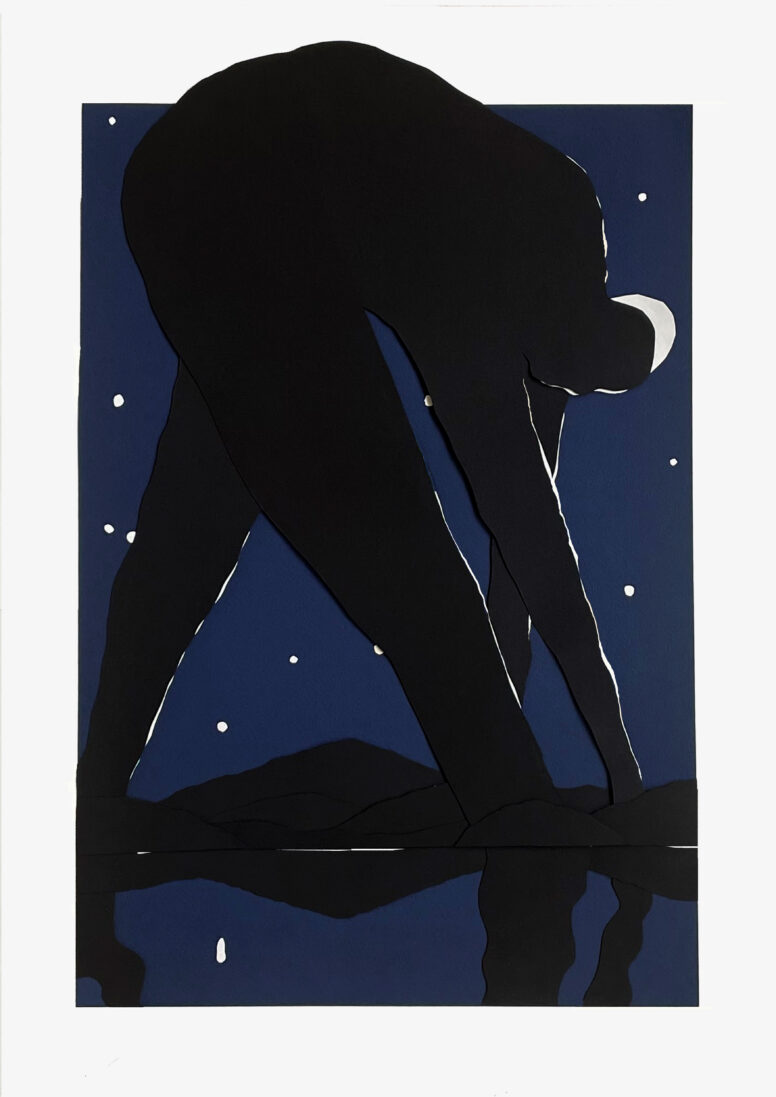
I use the word “heavy,” but as English is not my first language, maybe it’s not the exact right word. What I mean is that I like my drawings to have weight and power. I appreciate that in images in general: a lot of contrast, weight on human figures and objects. That’s also why I tend to use a lot of black and white – it gives personality to the human figures I often make appear. There’s always a big weight on the black, on the contrast. It’s also about communication. I create images partly for myself, as part of my own learning and research as a person, but I think it’s important someone else can understand what I did, and the contrast is my tool to achieve this.
Recently you started working with cut-outs. How did that happen?
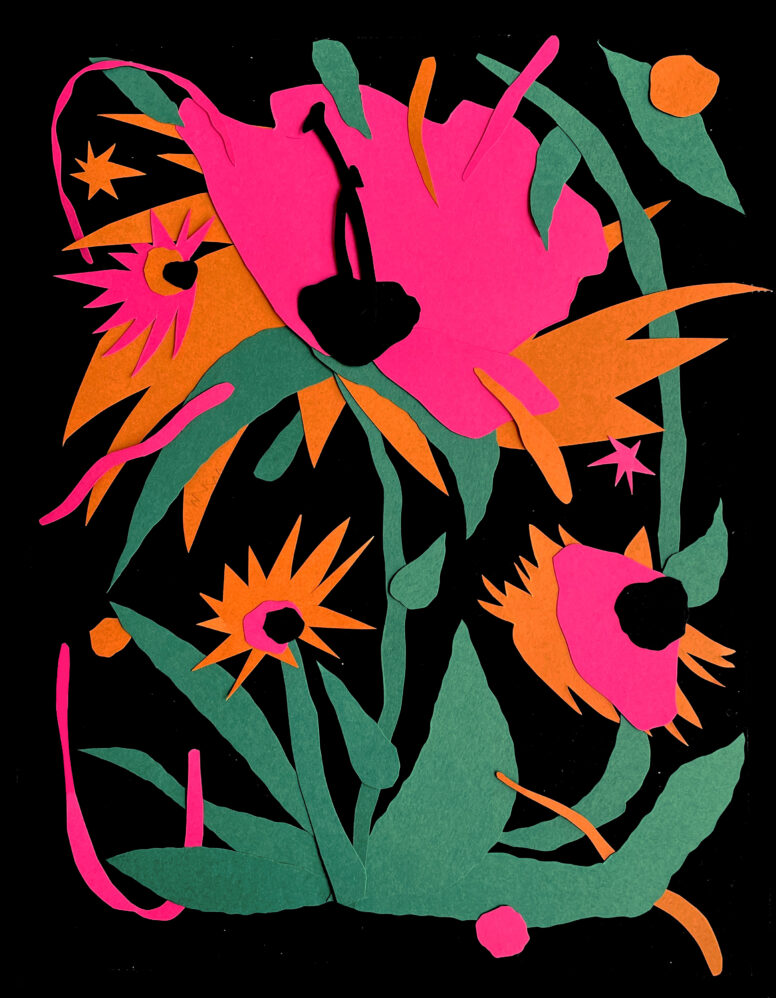
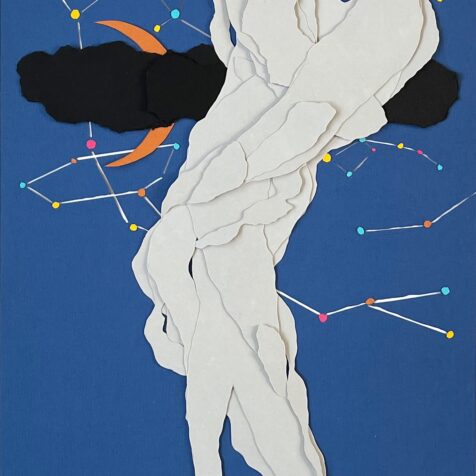
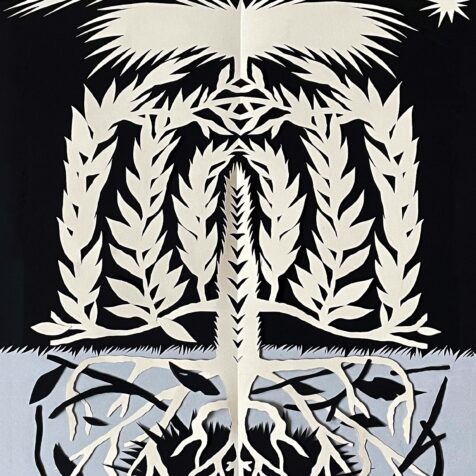
Yes, very recent – only since last December. I started working on them in the winter, and it’s actually quite similar to what I’ve done before, with the immediacy of the black. But I was sometimes getting impatient with Chinese ink – I had to let it dry, and it could get messy. Paper is even more immediate: it doesn’t have to dry, it doesn’t get dirty. It gives me space to make mistakes, too. I do the big work with big scissors. It’s really about immediacy.
Are there artists or techniques that feed into this?
I like artists who work with collage. I also love woodcuts – the texture is amazing. Sadly, I don’t have a studio to do that, but I wish I could do more of it. I love Frans Masereel – the everyday life, the views from the city. He has a beautiful way of representing with black and white and the printing technique. I also love posters from the ’70s, when they had to make a poster in like five minutes. And I look at artists from the past a lot – Vienna at the beginning of the 20th century, the Secession.
Do you listen to music while you work?
Always. It keeps my mind a bit busy in the background, which lets me draw in a much more relaxed way. Of course, there are moments when I need silence, but those are for very specific tasks. When I’m doing something else, I listen to music differently – I’m really listening. But when I draw, I get a bit loopy with music: I might play the same song three or more times.
You’ve also designed album covers. How does that process compare to your other illustration work?
It’s similar to illustrating for an article or a book cover. I always want to get to the essence, but then I also want to put that aside and work on my piece itself. Sometimes I’ve even worked on albums I didn’t listen to entirely – surprising perhaps, but that’s enough for me. Talking to the artists, understanding who they are, what their attitude is, already helps me a lot when creating.
You’re now based in Ghent. How does the city make you feel at home?
Mainly it’s the people I know here, of course. But Ghent also gives me something I’m very happy about: space and time. I love my hometown Barcelona a lot, but I was struggling there to find both. It’s a more complex city, more inputs. In Ghent I found a space to live and work that’s comfortable enough. My social life is smaller than in Barcelona, but this has allowed me to focus on my visual work. Yes, Ghent is colder, and everybody hibernates a bit, so there’s a risk I go a little insane, but I enjoy being a monk for some months.
You also studied at LUCA. How was that different from your earlier studies?
I did my master at LUCA, so I was already more developed and had some commissions. The approach was very different, more connected to fine arts, while my bachelor in Barcelona was more about communication. The pieces of the puzzle were there, but I had to reorder them. I found a more personal approach, and that also helped my commissions. It was a good process, but not easy. I was used to responding to a question, and now I had to develop what I wanted to say and then get people on board. I feel like I have a more solid voice now, more playful.
What excites you most about working with B’Rock?
When I got the call and heard “orchestra, music, visual pieces,” I immediately made the association. I listen to a lot of music, it’s always playing in the background when I think of concepts for images. So it was amazing to receive this as a longer-term project. It’s very exciting to me as an input for images. I work a lot on my own projects, but I can think differently when I’m asked to do something. When I’m in my sketchbook, there’s a very special, very magical process in my mind that I enjoy a lot. I feel like I’m in a bubble when I’m researching something, so this is the perfect scenario for me: one piece per project, but also a continuing whole.